
Learning to crochet is less difficult than it looks on the first evening. You need a hook, a ball of yarn and a few hours of practice, and after that you'll recognize the stitches in almost any pattern. This guide covers what you need, how to make your first stitches, how to read a pattern and which project to start with.
Checklist before you start
- Do you have a smooth yarn in a light color, so you can see your stitches?
- Does your hook match the yarn? Check the label on the ball.
- Do you know what your first project will be? Something small and flat is easiest.
- Do you have scissors and a yarn needle (tapestry needle) to weave in the ends?
What you need to start crocheting
For your first practice piece you don't need much. A hook between 4 and 5 mm (US G-6 to H-8) suits most beginners: big enough to see the loops, small enough that the yarn doesn't slip away. Pair it with a smooth, medium-weight yarn in cotton or a cotton blend. Fuzzy or very dark yarns make it hard to see where to insert your hook.
Beyond that you need scissors, a yarn needle with a large eye and, if you like, a few stitch markers. Stitch markers are little clips you hang in a stitch so you know where a row or round begins.
| Yarn weight | Hook size | Good for beginners? |
|---|---|---|
| Fine (fingering, sport) | 2.25 to 3.75 mm (US B-1 to F-5) | Better not yet, the stitches are tiny |
| Medium (DK, worsted) | 3.75 to 5.5 mm (US F-5 to I-9) | Yes, the best place to start |
| Bulky (aran, chunky) | 5.5 to 8 mm (US I-9 to L-11) | Yes, fast results, but it takes more hand strength |
The yarn label always has the final say. It shows the recommended hook or needle size, usually next to a small hook or needle symbol.
Holding the hook and the yarn
There are two common ways to hold a crochet hook. With the pencil grip you hold it like a pen; with the knife grip your hand rests over the hook like you'd hold a table knife. Neither is better. Pick the one that still feels comfortable after ten minutes.
Your other hand guides the yarn. Many people run it over the index finger and pinch it lightly between the little finger and ring finger. That keeps the yarn under tension without squeezing. If your stitches come out very tight, let the yarn slide through your fingers a little more loosely.
Your first crochet stitches
Almost every project starts with a slip knot. Make a loop in the yarn, pull the working yarn through that loop and tighten: you now have a loop on your hook that you can make bigger or smaller.
Chain (ch)
Wrap the yarn over your hook (yarn over) and pull it through the loop on your hook. That's one chain. Repeat until you have a chain of about 15. This foundation chain is what you work your first row into.
Single crochet (sc)
Insert your hook into the second chain from the hook, yarn over and pull up a loop. You now have two loops on your hook. Yarn over again and pull through both loops. That's one single crochet. Work a whole row like this, chain 1 to turn, flip your work and crochet the next row into the stitches of the previous one. In UK patterns this stitch is called double crochet.
Double crochet (dc)
A double crochet is taller, so your work grows faster. Yarn over first, insert your hook into the stitch, yarn over and pull up a loop (three loops on your hook). Yarn over and pull through two loops, then yarn over once more and pull through the last two. In UK patterns this is a treble.
Practice these three on a test swatch before you start a project. Once they feel natural, the slip stitch, half double crochet and treble are easy to add.
How to read a crochet pattern
Patterns use abbreviations to keep the instructions short. The confusing part: US and UK patterns use the same words for different stitches.
| Abbreviation (US) | US term | UK term |
|---|---|---|
| ch | chain | chain |
| sl st | slip stitch | slip stitch |
| sc | single crochet | double crochet (dc) |
| hdc | half double crochet | half treble (htr) |
| dc | double crochet | treble (tr) |
| tr | treble crochet | double treble (dtr) |
So always check whether a pattern uses US or UK terms. A quick tip: UK patterns don't normally use the term "single crochet", so if you see "sc", it's a US pattern.
A number in parentheses at the end of a row usually tells you how many stitches you should have. Count after every row and you'll spot a mistake straight away. An asterisk (*) means you repeat the part after it as many times as the pattern says.
Which project to make first
Start with something small and flat, so all you have to think about are your stitches.
- A potholder or coaster: a square of single crochet, done in an evening, and you'll use it right away.
- A scarf: long rows of the same stitch, perfect for getting your tension even.
- A granny square: your first step into working in rounds, and good practice with double crochet.
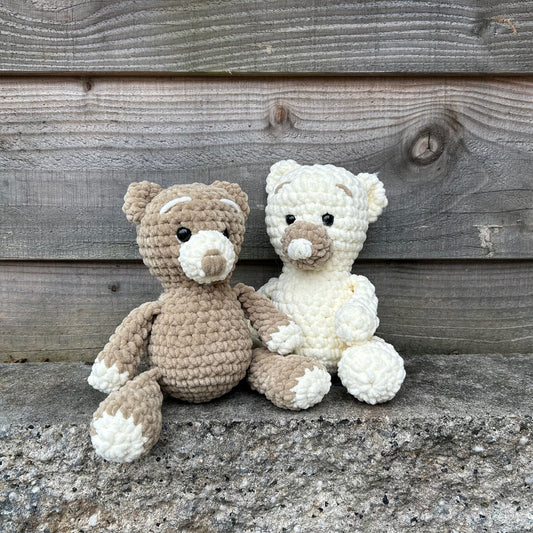
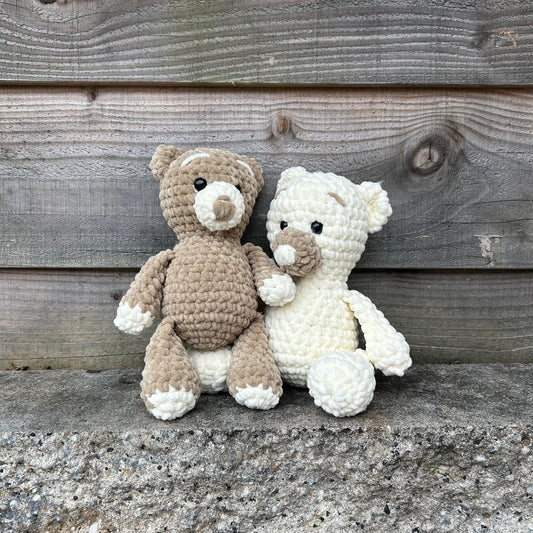
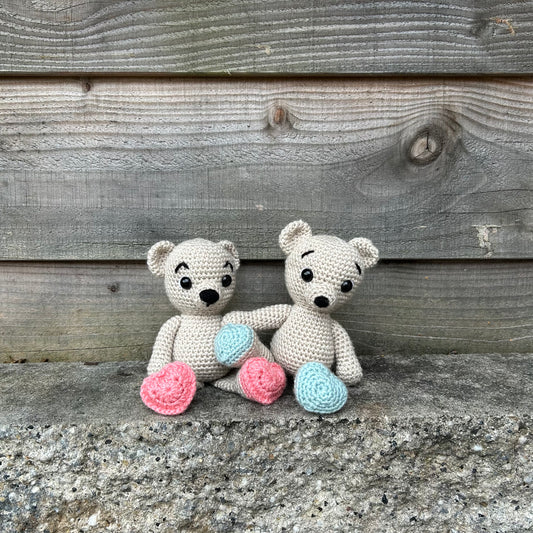
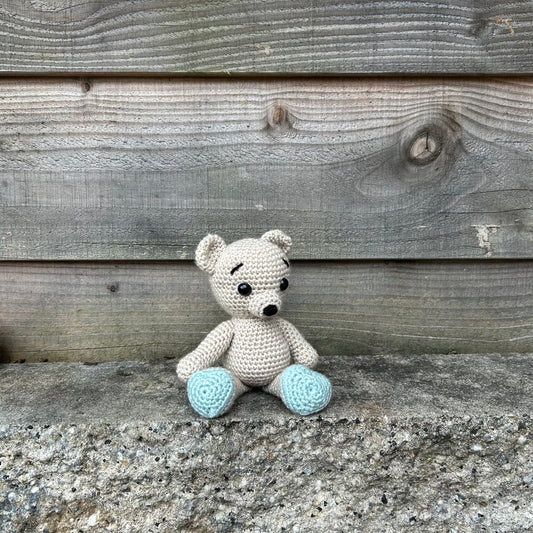
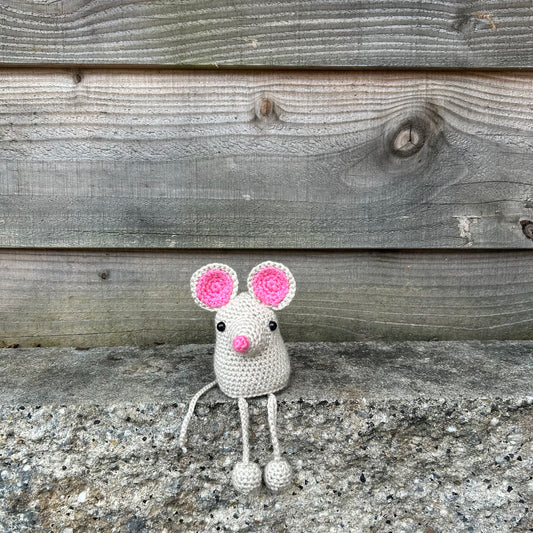
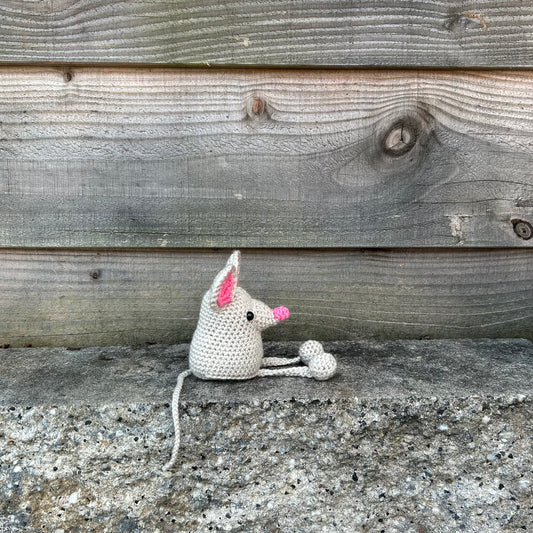
- Amigurumi: a bit harder, because you work in a spiral and have to count. You usually start with a magic ring.
Common beginner mistakes
Most beginners crochet too tightly because they grip the yarn hard. The fabric turns stiff and it's a struggle to insert the hook. Relax your hand or try a hook half a size bigger. The second classic: your piece slowly gets narrower or wider. That happens when you skip the first or last stitch of a row, or work into it twice. A stitch marker in the first and last stitch helps.
Not sure yet whether crochet is your thing? Our comparison of knitting vs crochet helps you choose.
Crochet for beginners FAQ
Is crochet hard to learn?
No. The first evening feels clumsy, but most people can make a neat row of single crochet after a few practice sessions. Counting stitches and reading patterns follow naturally after that.
What do you need to crochet?
A hook, a ball of yarn, scissors and a yarn needle. Stitch markers are handy but optional; a scrap of yarn in a different color works too.
What size crochet hook is best for beginners?
A 4 to 5 mm hook (US G-6 to H-8) with a smooth, medium-weight yarn. Always check the yarn label for the matching size.
Is crochet easier than knitting?
For many people, yes, because you use one hook and only ever have one active loop. If you drop that loop, your work doesn't unravel down the rows the way knitting can.
How long does it take to learn to crochet?
Most people have the basic stitches down after a few evenings. A first potholder or scarf usually takes a week or two, depending on how much you practice.
Which crochet patterns are good for beginners?
Patterns with one or two stitch types and a flat shape, like a potholder, a scarf or a granny square. Leave patterns with lots of color changes or shaping for later.
Get started
Grab a light-colored ball of yarn and a 4 or 5 mm hook, make a chain of 15 and work a few rows of single crochet. Once those rows look even, you're ready for your first real project. A simple crochet flower is a nice next step once you can make a magic ring.