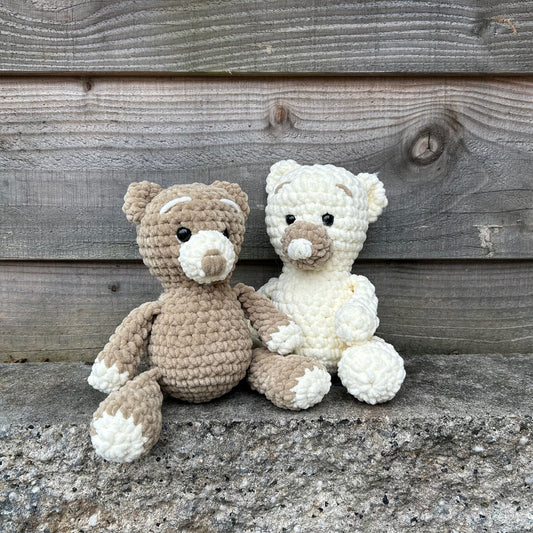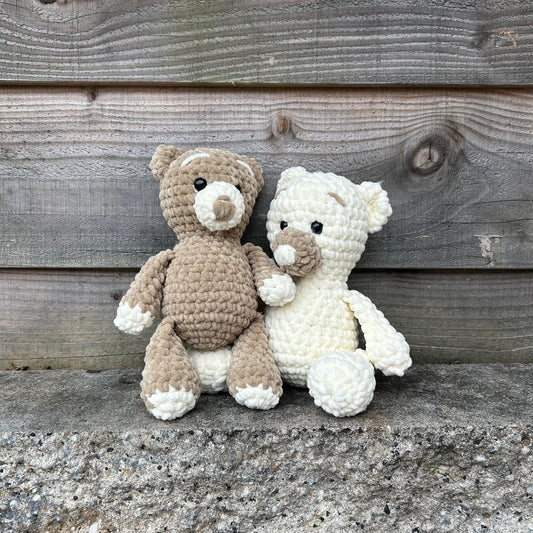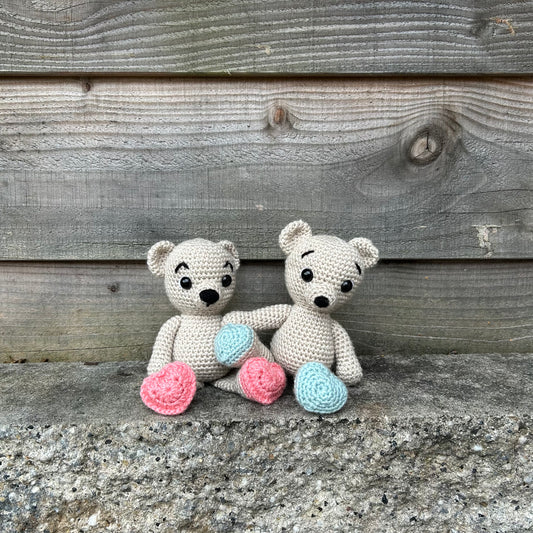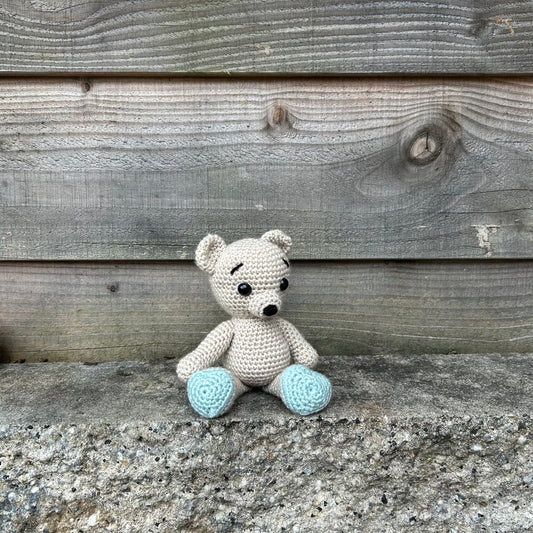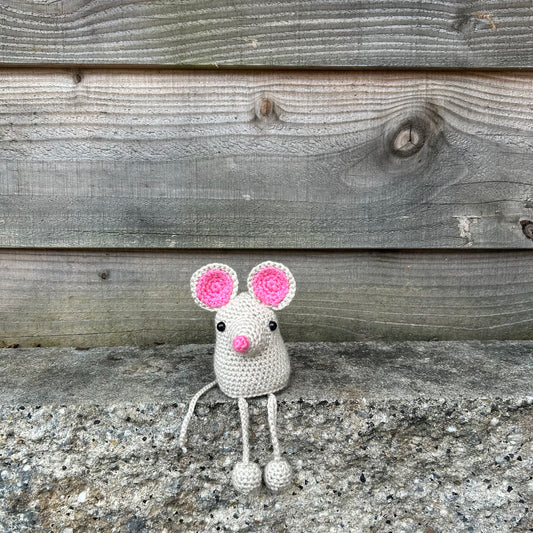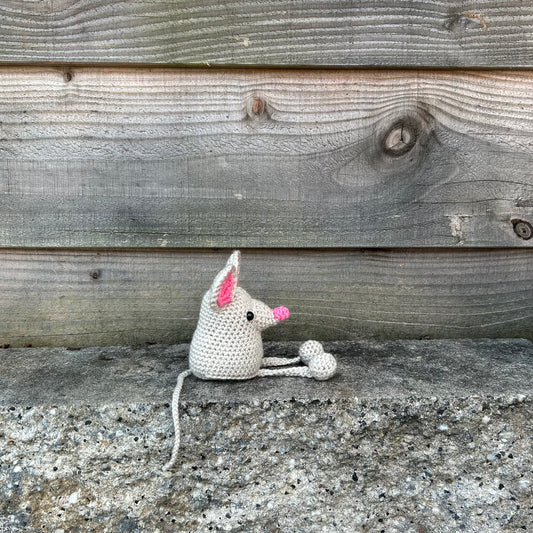

Almost every amigurumi without a hole in the middle starts with a magic ring. The technique itself is simple. The tricky part is the first few attempts, when the loop tends to slip off your fingers right at the moment everything needs to come together. If you're completely new to crochet, start with our guide to crochet for beginners and come back here once you can make a row of single crochet.
What is a magic ring, and why use one?
The traditional way to start working in the round is to chain a few stitches and join them with a slip stitch. That works, but it often leaves a small hole in the center, which on an amigurumi is exactly where the nose or the tummy ends up. A magic ring (also called a magic circle or adjustable ring) solves that. You wrap the yarn around your fingers to form a loop, work your first round of stitches into it, and then pull the tail until the loop closes completely. The result is a tight, closed center.
A quick note on terms: this article uses US crochet terms. Single crochet (sc) is called double crochet in UK patterns, and a slip stitch (sl st) is the same in both.
Magic ring vs. chain ring
| Feature | Magic ring | Chain ring |
|---|---|---|
| Hole in the center | Closes completely | Often a small gap |
| Best for | Amigurumi, mandalas, round motifs | Granny squares and motifs where a tiny hole doesn't matter |
| Difficulty | Takes some practice, then it's quick | Easy from the start |
| Adjusting afterwards | Yes, you tighten it at the end | No, the size is fixed once you join |
How to make a magic ring, step by step
- Lay the yarn tail across the palm side of your fingers, with the working yarn (the end going to the ball) hanging down behind.
- Wrap the working yarn once around your index and middle fingers so the two strands cross and form a loop.
- Insert your hook under the crossed strands from front to back, grab the working yarn and pull up a loop.
- Yarn over and pull through the loop on your hook to make 1 chain. This chain secures the ring and does not count as a stitch.
- Work the number of stitches your pattern asks for into the ring (usually 6 sc), always going around both strands: the loop and the tail.
- Gently pull the tail. The loop draws closed and the hole disappears.
- Join with a slip stitch into the first sc, or keep going in a spiral if your pattern says so (most amigurumi patterns do).
If wrapping the yarn around your fingers feels awkward, wrap it around a pencil or a thick marker instead, slide the loop off carefully and continue the same way. Some people find that much easier to hold.
Common magic ring mistakes
- Working around only one strand instead of both. The stitches then slide off the loop as soon as you pull the tail.
- Pulling the tail before all the stitches are in.
- Wrapping too tightly, so your hook barely fits through the loop.
- Weaving in the tail too loosely. A magic ring can open up again with use, so weave the tail in a few different directions, especially on toys.
Which yarn and hook should you use?
For amigurumi, pick a smooth yarn that holds its shape well, such as cotton or a cotton blend. Durable Cosy Fine (58% cotton, 42% acrylic) works nicely and comes in dozens of colors. Use a hook a size smaller than the label suggests, so the stitches stay dense enough to keep the stuffing inside. For a yarn like that, that often means a 3.5 mm (US E-4) hook.
Skip fuzzy yarns like mohair for your first attempts. The loose fibers make it hard to see your stitches and the loop, and mohair doesn't like being pulled tight.
When you don't need a magic ring
For a granny square that you'll sew into a blanket anyway, a simple chain ring is just as good and faster to make. The magic ring pays off mainly where the center stays visible: toys, round coasters, a crochet flower or the middle of a crochet Christmas ornament.
Magic ring FAQ
Is a magic ring the same as a magic circle?
Yes. Magic ring, magic circle and adjustable ring are all names for the same crochet technique. Don't confuse it with "magic loop", which in English usually refers to a knitting method for working small circles on a long circular needle.
How many stitches go into a magic ring?
That depends on the pattern, but for amigurumi, 6 single crochet in the first round is the most common start. Flat circles often start with more.
My magic ring keeps coming loose. What am I doing wrong?
Usually you're working around only one strand of the loop instead of both, or the tail isn't woven in securely. Pull the ring closed firmly, then weave the tail back and forth through the first round.
Can you use a magic ring in knitting?
Not directly, since it's a crochet technique. Some knitters do start center-out projects with a crochet-style ring, though: the "Emily Ocker" circular cast-on uses a crochet hook to work stitches into a ring and then moves them onto knitting needles.
Is a magic ring hard for beginners?
It feels fiddly the first time, but after three or four tries most people get it. Practice with a light-colored, smooth yarn so you can see what's happening.
Conclusion
The magic ring takes more attention at first than it deserves, and then it never leaves your toolkit. After a few rounds of practice you'll use it almost automatically for anything round. Curious how crochet compares to knitting for this kind of project? Read knitting vs crochet.