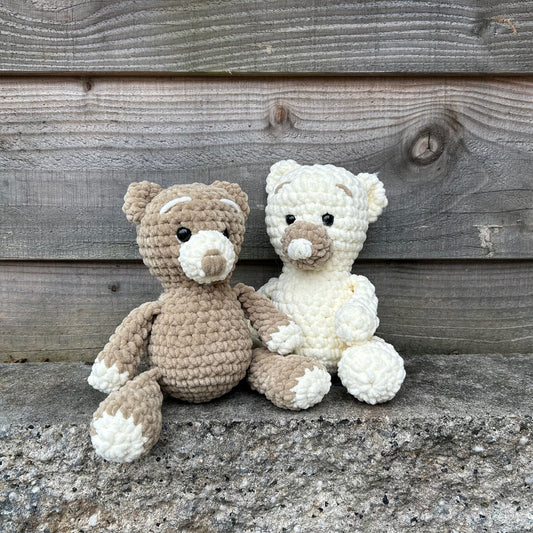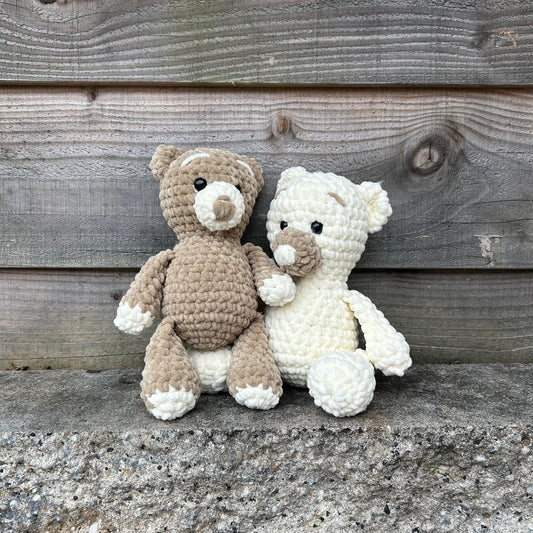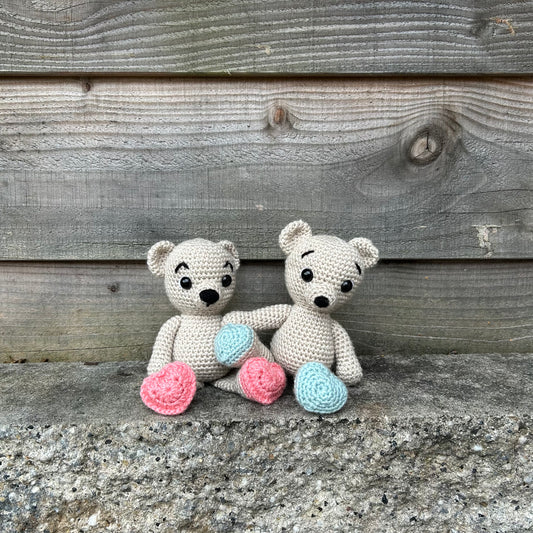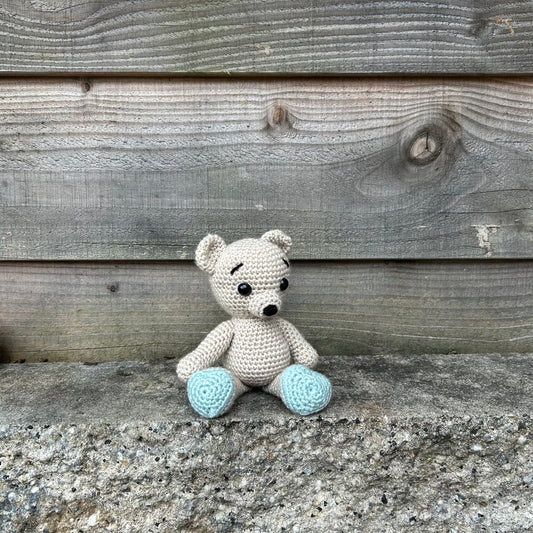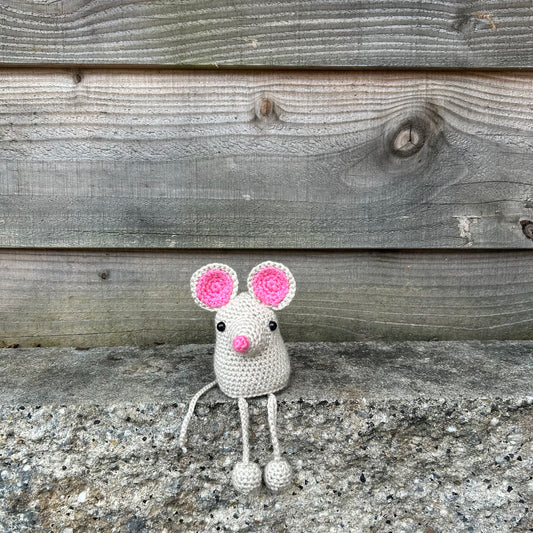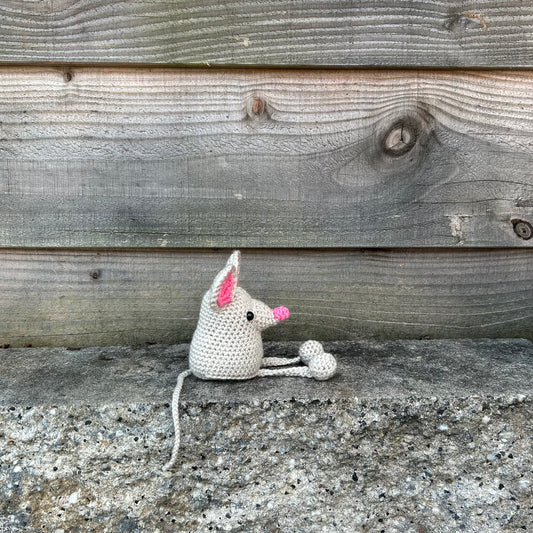

A well-loved stuffed animal goes through a lot. It gets dragged on vacation, dropped in the bath and squeezed every night until the stuffing starts to shift. Washing it isn't the same for every toy, though. The yarn or fabric, the stuffing and how the details are attached decide whether a stuffed animal can go in the washing machine or is better washed by hand. This guide focuses on crocheted and knitted toys, but the same rules work for most soft toys.
Checklist before you wash a stuffed animal
- Do you know what it's made of? Acrylic and most synthetic yarns behave differently in water than real wool.
- Is the stuffing loose, or is the toy closed up tightly? Loose stuffing shifts and clumps more easily in the wash.
- Are the eyes embroidered, glued on or plastic safety eyes with a washer on the back? Glue and water don't always get along.
- Does it have a sound box, batteries or a pellet-filled base? Then it's surface cleaning only, or careful hand washing with the electronics removed first.
- Has the toy been wet before without drying properly? Check for a musty smell first.
- Do you have time to let it dry? Plan on at least a day, longer for a thick toy.
Hand wash or machine: what a crocheted stuffed animal can handle
| Situation | Method | Water temperature | Drying |
|---|---|---|---|
| Small stain or a smell | Spot clean with a damp cloth and a little mild detergent | Lukewarm | Air dry, a few hours |
| Acrylic or cotton yarn, firmly closed with fiberfill stuffing | Hand wash in a basin, or a delicate cycle inside a mesh laundry bag | Up to 30 °C / 86 °F | Press out water, then dry flat |
| Real wool (not superwash) | Hand wash only, no rubbing or agitation, or it will felt | Cold to lukewarm, same temperature for washing and rinsing | Roll in a towel, dry flat |
| Glued details, delicate embroidery or a sound box | By hand or surface clean only, never in the machine | Cold to lukewarm | Dry flat, out of direct sunlight |
| Large toy with lots of stuffing | By hand; the stuffing gets compressed unevenly in a machine | Cold to lukewarm | At least a day, fluff the stuffing now and then |
Why acrylic yarn is the easiest to wash
Most crocheted stuffed animals (amigurumi) are made with acrylic or a similar synthetic yarn, and that's good news on laundry day. Acrylic hardly shrinks and won't felt like wool. What it doesn't like is heat. Hot water, a hot iron or a tumble dryer on high can relax acrylic fibers for good, and crocheters even have a name for it: "killing" acrylic. The stitches go limp and flat and the toy loses its plump shape. So wash cool to lukewarm and air dry. Cotton is sturdy too, but it can shrink a little in hot water. Real wool is the most delicate: warm water plus movement makes it felt, and that can't be undone. Our guide on how to wash wool explains the differences per fiber in more detail.
Why hand washing is often the safer choice
A washing machine tumbles and spins, and that's exactly what a stuffed toy struggles with. The stuffing can clump or slide to one side, and glued or embroidered details can come loose. For a toy a child uses every day, a hand wash in lukewarm water with a splash of mild detergent is usually the better choice, even when the yarn itself would survive the machine.
Here's how: fill a basin with lukewarm water and a little mild detergent, submerge the toy and gently squeeze it a few times. Let it soak for 10 to 15 minutes, then rinse in clean water of the same temperature until no more suds come out. Press the water out without wringing or twisting, roll the toy in a dry towel and press again.
Drying the stuffing: the step that usually goes wrong
The outside of a stuffed animal dries fast. The stuffing in the middle takes much longer. A toy that feels dry can still be damp inside, and that's where a musty smell or even mold starts. Put a freshly washed toy somewhere with good airflow, turn it over after a few hours and fluff the stuffing with your hands now and then so air can get in. Not sure if it's completely dry? Wait another day rather than putting it back in bed too soon.
Frequently asked questions about washing stuffed animals
Can a crocheted stuffed animal go in the washing machine?
If it's made from acrylic or cotton yarn, firmly closed and filled with polyester fiberfill, usually yes: a delicate cycle at 30 °C (86 °F) in a mesh laundry bag. If the stuffing is loose, the yarn is real wool or the toy has delicate details, wash it by hand.
Can I put a stuffed animal in the dryer?
Not a crocheted one. Heat can flatten acrylic yarn for good and the stuffing dries unevenly. Air drying takes longer but keeps the shape.
How often should you wash a stuffed animal?
It depends on how much it's used. For a toy that goes everywhere, a few times a year is common. One that mostly sits on a shelf rarely needs more than a dusting.
My stuffed animal smells musty after washing. What went wrong?
Most likely the stuffing inside wasn't completely dry. Next time, give it at least a full day in a well-ventilated spot and fluff the stuffing now and then.
Can I wash a toy with safety eyes or embroidered details?
Plastic safety eyes with a locking washer usually come through a gentle hand wash fine. Glued-on eyes and delicate embroidery are better washed by hand only, because the tumbling and spinning of a machine can loosen them.
A little care keeps a stuffed animal soft for years
A crocheted stuffed animal takes hours to make, and a few simple habits keep it soft and in shape after washing: cool to lukewarm water, hand washing where you can, and patience with drying. Making one yourself? Pick a yarn that washes easily; our guide to the best yarn for crochet compares acrylic, cotton and wool, and yarns that pill the least stay neat longer on a toy that gets cuddled every day. For the making itself, start with our beginner's guide on how to crochet amigurumi.