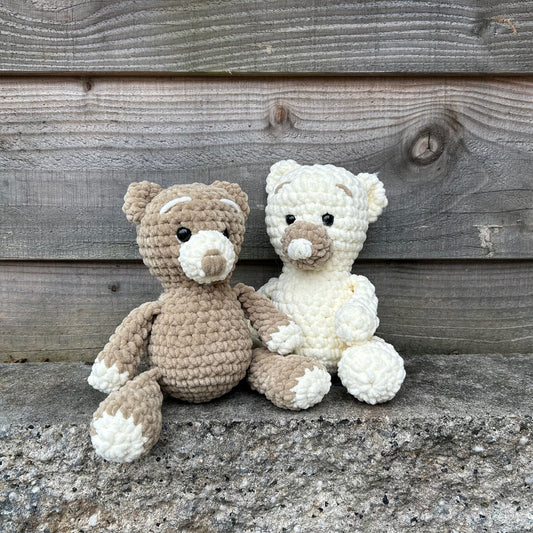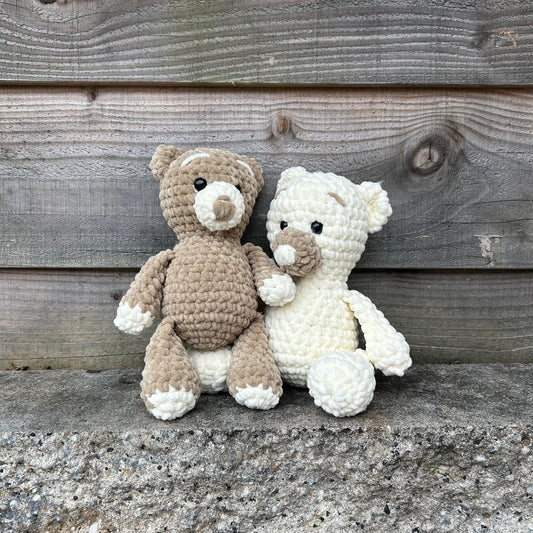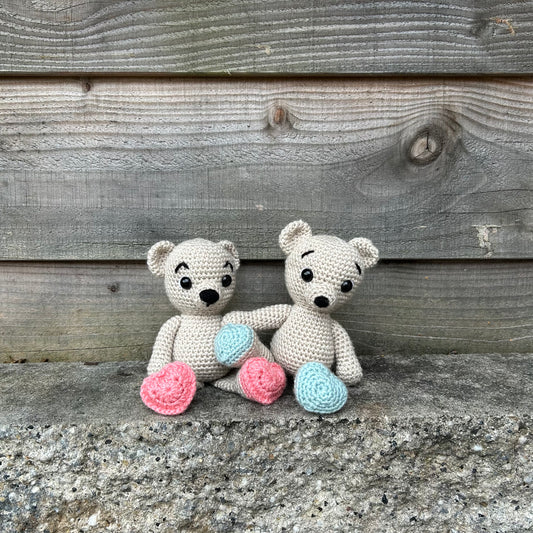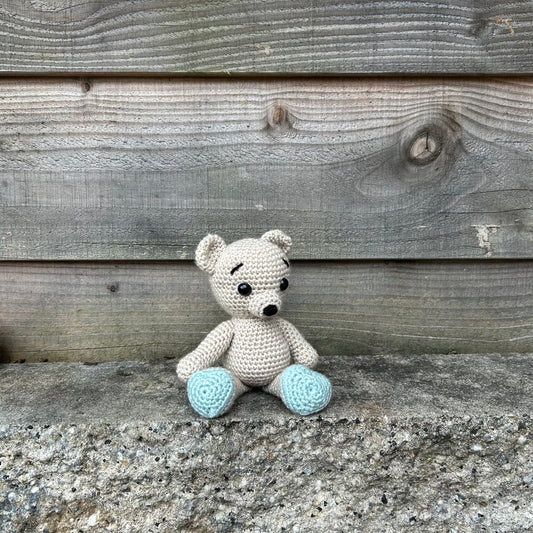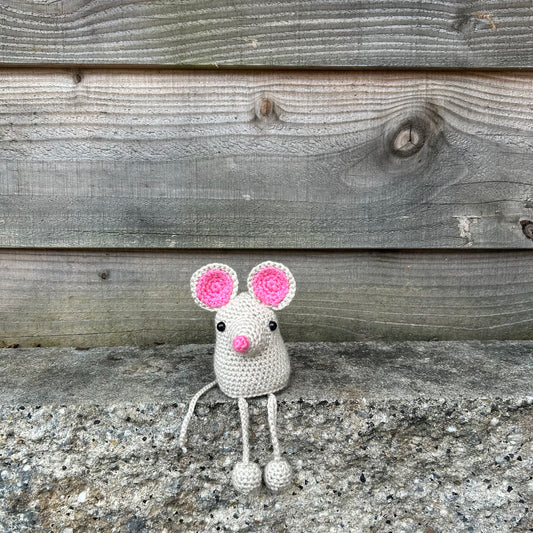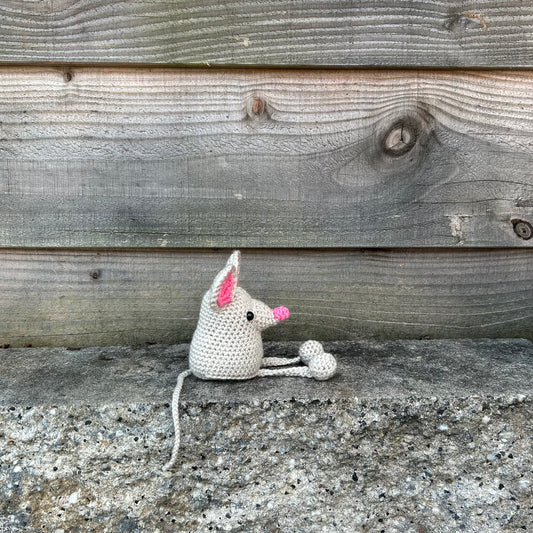

Amigurumi, the small crocheted animals and dolls that started in Japan, is the next step for many people after a first scarf or potholder. You work in small rounds, you see results quickly, and after a few evenings there is a little figure with its own face sitting on your table. This guide walks you through yarn, hook size, the basic technique and the mistakes almost every beginner makes.
What you need to start
- A crochet hook about one size smaller than the yarn label suggests
- Cotton or cotton-blend yarn in the colors of your figure
- Stuffing (polyester fiberfill or recycled fill)
- A tapestry needle to sew the pieces together
- Safety eyes, or embroidery thread for the face
- A stitch marker to mark the start of each round
Crochet terms in this guide
This article uses US crochet terms. If you learned crochet with UK patterns, this is how they translate:
| US term | Abbreviation | UK term |
|---|---|---|
| single crochet | sc | double crochet (dc) |
| increase (2 sc in one stitch) | inc | 2 dc in one stitch |
| decrease (sc 2 together) | dec / sc2tog | dc2tog |
| slip stitch | sl st | slip stitch |
The full list of stitches, with turning chains, is in our guide to basic crochet stitches.
Which yarn and hook to choose
Cotton or a cotton blend is the classic amigurumi yarn: it gives the stitches enough structure to hold their shape, and the stitch definition stays crisp. Durable Coral is a favorite for this at De Garengarage. It is 100% cotton (50 g / 125 m) in soft vintage shades, and firm enough to keep a toy in shape. The differences between fibers are explained in more detail in the best yarn for crochet.
Choose your hook on purpose smaller than the label says. Coral recommends 2.5 to 3.5 mm; for amigurumi, 2.5 mm (between US B/1 and C/2) is a good start. A smaller hook makes tighter stitches, so the stuffing does not peek through. If you still see gaps, go down another half size. But don't overdo it: with a hook that is far too small, crocheting gets slow and tiring for your hands.
The basic technique: single crochet in a spiral
Amigurumi is almost always worked in single crochet, in continuous rounds without joining. You start with a magic ring, which gives a tight center without a hole. How to make one, step by step, is in our guide to the magic ring. From there you work in a spiral: you do not close each round with a slip stitch, you simply crochet into the first stitch of the next round. A stitch marker in the first stitch of every round keeps your count on track.
Shaping comes down to two moves. An increase (inc) is 2 sc in the same stitch. A decrease (dec) is 2 stitches crocheted together into one. For a neater result, use the invisible decrease: insert your hook into the front loop only of the next two stitches, yarn over, pull through both front loops, then yarn over and pull through the two loops on your hook.
Practice piece: a simple ball
Almost every amigurumi head and body starts as a ball, so it is the best first exercise. With cotton yarn and a 2.5 mm hook it comes out at roughly 3 to 4 cm (about 1.5 in) across.
- Round 1: 6 sc in a magic ring (6)
- Round 2: inc in each stitch (12)
- Round 3: *sc 1, inc* 6 times (18)
- Round 4: *sc 2, inc* 6 times (24)
- Rounds 5 to 9: sc in each stitch (24)
- Round 10: *sc 2, dec* 6 times (18)
- Round 11: *sc 1, dec* 6 times (12). Stuff the ball firmly now.
- Round 12: dec 6 times (6). Cut the yarn, thread it through the front loops of the last 6 stitches and pull the hole closed.
Want a tiny version for your keys? Our crochet keychain guide uses the same idea at a smaller scale.
Stuffing and finishing
Stuff as you go instead of waiting until the very end. Small pieces of stuffing at a time prevent lumps and give a firm, even shape. When you finish a piece, pull the yarn through the last loops and secure it well, so nothing comes loose once the toy gets hugged. Sew on ears, arms and legs with a tapestry needle, and leave a long tail on each piece for this. If the toy is meant for a baby or a toddler, embroider the face instead of using safety eyes, so there is nothing that can come off. And when your toy needs freshening up after a lot of cuddles, our guide on how to wash stuffed animals explains how to do it without ruining the shape.
Yarn choices for amigurumi compared
| Yarn type | Feel | Good for |
|---|---|---|
| Cotton, such as Durable Coral | Firm, crisp stitches | Classic small amigurumi, figures with fine detail |
| Soft acrylic, such as Durable Comfy (100% microfiber acrylic) | Very soft, a bit more stretch | Larger, cuddlier toys |
| Chunky or plush yarn | Thick and fast | Big, simple shapes; stitches are harder to see |
Common mistakes with your first amigurumi
The most common problem is a hook that is too big for the yarn, so the stuffing shows between the stitches. Go down a size. Counting also goes wrong a lot at the start, especially on increase and decrease rounds, so check your stitch count at the end of every round. And many beginners use too little stuffing, which leaves the figure floppy instead of firm and round.
Frequently asked questions about amigurumi
What hook size should I use for amigurumi?
Use a hook about one size smaller than the yarn label suggests. With cotton like Durable Coral that means around 2.5 mm (US B/1 to C/2). Tighter stitches keep the stuffing hidden.
What is the best yarn for amigurumi?
A firm cotton or cotton blend holds its shape best. Acrylic yarns are softer and work well too, but they stretch a little more.
How do I stop the stuffing from showing?
Use a smaller hook than recommended and keep your stitches snug. A dense fabric hides the stuffing on its own.
What is the difference between amigurumi and other crocheted toys?
Amigurumi is the Japanese word for small knitted or crocheted stuffed figures, usually made in separate pieces and sewn together. The technique, single crochet in a spiral, is the same as for bigger crocheted toys.
Can I crochet amigurumi without a pattern?
For your first few figures, a pattern with stitch counts per round is a good idea, mainly to get the proportions between head, body and arms right. With some experience you will start improvising.
How much yarn do I need for an amigurumi?
A small figure of 15 to 20 cm (6 to 8 in) usually needs one 50 g ball of the main color, plus scraps for details. Larger toys in several colors can take two or three balls.
Where to go from here
Amigurumi combines a simple technique with a result that makes you happy straight away: a little figure you made yourself. Start small, pick a firm cotton and a hook just under the recommended size, and build up from there. Once the ball works, a character is a good next challenge: our guide to crochet Pokémon shows how to turn simple shapes into a recognizable figure. If you are still finding your feet with crochet in general, crochet for beginners covers the very first steps.